
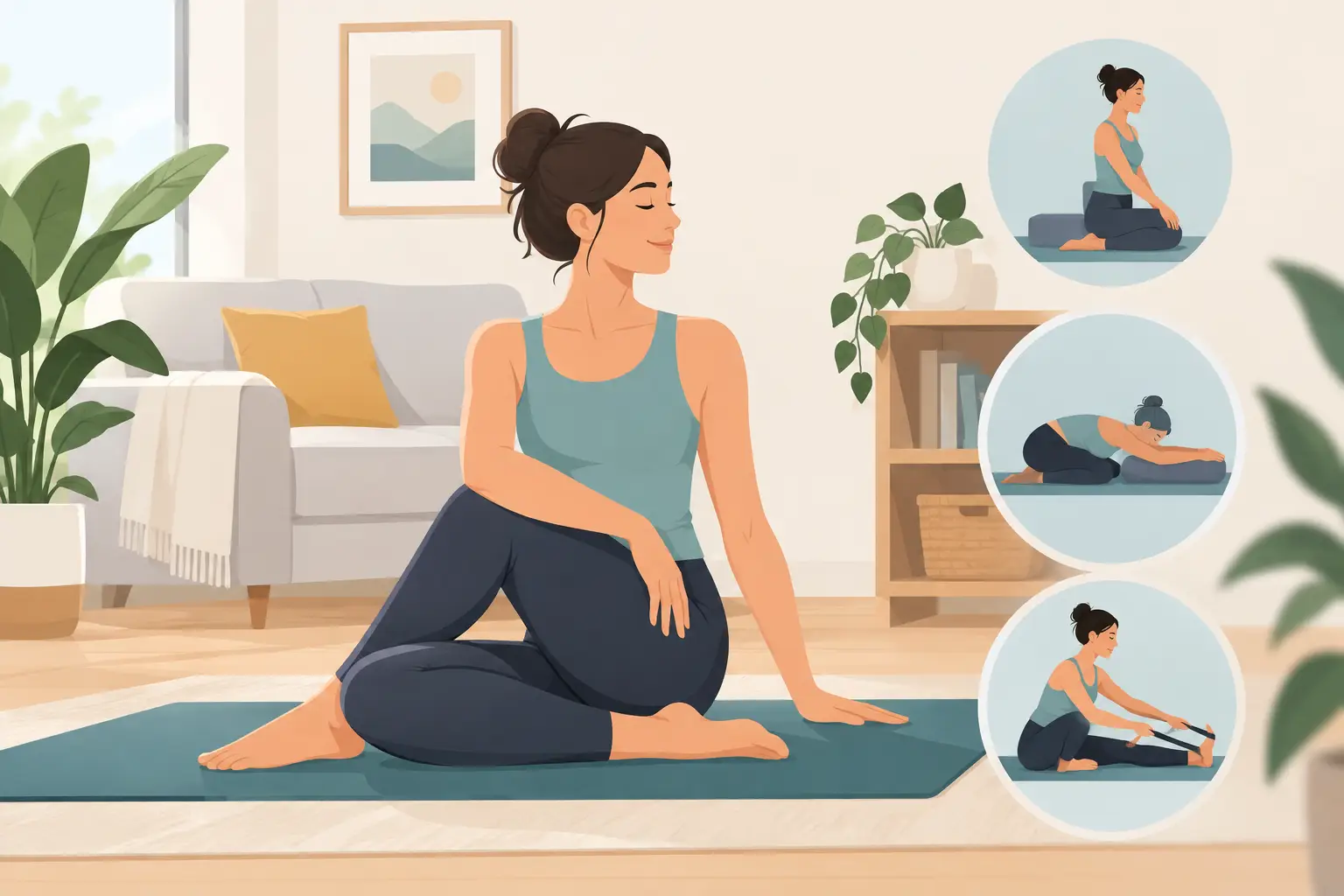
Yoga modifications are not a sign that you are behind, less flexible, or doing yoga incorrectly. They are one of the most caring ways to meet your body where it is. A shape that feels steady and spacious for one person may feel strained, unbalanced, or inaccessible for another. Your practice can change from day to day, too, depending on sleep, stress, energy, injury recovery, or simply how you feel when you arrive on your mat.
At Cheemah on South Main, we believe yoga is a place to listen rather than perform. Modifying a pose can help you find strength without gripping, stretch without forcing, and stillness without discomfort. It creates room for a practice that belongs to you.
What Yoga Modifications Really Mean
A modification is an intentional adjustment to a pose, transition, or breathing practice. It may involve changing your position, reducing the range of motion, using a chair or wall for support, adding a prop, or choosing a completely different shape with a similar benefit.
For example, a standing balance may become a balance with one hand on the wall. A deep forward fold may become a seated fold with bent knees. A floor-based pose may move to a chair so that getting down and back up feels more comfortable. The purpose is not to copy the most advanced version of a posture. The purpose is to create a version that supports your body safely and meaningfully.
A good modification preserves the heart of the pose while respecting your needs. Sometimes that means building gentle leg strength. Sometimes it means opening the chest, calming the nervous system, or practicing balance with more stability. The outer shape may look different, but the experience can be every bit as valuable.
Why Modifications Can Deepen Your Practice
When people feel pressure to keep up, yoga can become another place where they ignore their own signals. A pose may be uncomfortable because the body is learning, but sharp pain, pinching, numbness, dizziness, or breath-holding are invitations to pause and adjust. Choosing support at that moment is not giving up. It is mindful practice.
Modifications can also help you develop confidence over time. When a posture is scaled to a level that feels manageable, you can notice alignment, breath, and sensation instead of simply trying to endure it. That steadier foundation often makes gradual progress more possible than pushing into a shape before your body is ready.
There is no single right version of yoga. Bodies differ in proportion, joint structure, strength, mobility, age, health history, and lived experience. Even a familiar pose may ask for something different on a stiff morning than it does after a restful week. Yoga makes room for that truth.
Simple Yoga Modifications for Common Poses
Make standing poses more stable
Standing poses can build strength and confidence, yet they may feel uncertain when balance is limited or the legs are tired. Bringing your feet a little farther apart can create a stronger base. In Warrior II, for instance, shortening the stance and bending the front knee less may make the posture feel more sustainable while still awakening the legs and hips.
A wall can offer quiet reassurance. Resting fingertips or a full hand on the wall during Tree Pose lets you explore balance without worrying about falling. You may also keep the lifted foot at the ankle or calf rather than placing it high on the thigh. The pose remains a balance practice, and your attention can stay with your breath rather than with fear of losing your footing.
Bring the floor closer with a chair
Chair yoga is not a lesser version of yoga. It is a practical, powerful way to experience movement with stability and support. Sitting in a chair can make twists, side stretches, gentle backbends, and hip-opening movements more accessible for people with limited mobility, knee sensitivity, or concerns about getting down to the floor.
A chair can also support standing work. Place a hand on the chair back during a lunge or use the seat for a supported forward fold. For some practitioners, this added contact creates enough security to move with greater ease. For others, it helps conserve energy so the practice feels nourishing instead of exhausting.
Soften forward folds and hamstring stretches
Forward folds are often misunderstood as a test of flexibility. They are not. Bending the knees generously can reduce strain in the lower back and make space for the pelvis to tip forward comfortably. You can rest your hands on blocks, a chair seat, or your thighs rather than reaching toward the floor.
In a seated forward fold, sit on a folded blanket or firm cushion if your low back rounds immediately. Elevating the hips may make it easier to lengthen the spine. A strap around the feet can bring the feet closer to your hands without asking you to strain through the shoulders or neck.
Adapt planks and floor transitions
Plank Pose can be strengthening, but it asks a great deal of the wrists, shoulders, core, and legs. A wall plank offers a gentle way to explore the same long-body action while decreasing the amount of weight on the hands. Placing your hands on a chair, countertop-height surface, or sturdy wall can make a meaningful difference.
Knees-down plank is another supportive option, especially when you maintain a long line from knees through hips to head. In vinyasa-style movement, you can also skip a lowering transition and move directly from Downward-Facing Dog to hands and knees, Child’s Pose, or a standing position. Resting is part of the sequence, not a departure from it.
Create comfort in seated and reclined poses
Props can transform how restorative poses feel. If cross-legged sitting brings discomfort to your hips or knees, sit on a blanket, bolster, or chair. Place support beneath the knees in a reclined position to soften tension in the low back. In Child’s Pose, a bolster under the chest can make the pose feel spacious rather than compressed.
For a reclined twist, keep the knees closer together or place a pillow beneath them. The goal is a gentle rotation and an easy breath, not forcing the knees toward the floor. When your body is supported, it often has more room to release.
How to Know When to Modify
Your breath is one of the clearest guides. If you cannot breathe smoothly, speak a few words, or soften your jaw in a pose, the shape may be asking too much right now. Backing off slightly, adding support, or taking a rest can help you return to a steadier rhythm.
Notice the quality of sensation as well. A mild stretch or muscular effort can be appropriate, but pain is not a requirement for progress. Sharp, burning, electric, or joint-centered discomfort deserves attention. Come out of the pose, choose a gentler option, and seek guidance from a qualified health professional when needed, especially after an injury or with an ongoing medical condition.
There are also moments when modification is about energy rather than pain. On a day when you feel depleted, a shorter hold, slower pace, or restorative posture may be the wisest choice. On a day when you feel well-rested, you may choose to explore a fuller expression. Both choices are honest practice.
The Value of Personalized Guidance
Online images can make yoga appear very precise, as if everyone should place a hand, foot, or knee in exactly the same spot. In a small, instructor-led class, you have the opportunity to receive options that account for your movement, questions, and goals. A teacher can offer a prop, suggest a different stance, or help you find an approach that feels more secure.
Private yoga sessions can be especially helpful if you are returning after a long break, managing mobility changes, recovering confidence after an injury, or simply wanting more individual attention. Together, you can explore the movements that support your daily life, whether that means getting up from a chair with greater ease, improving balance, easing stiffness, or creating a calming routine at home.
Aerial yoga can be adapted, too. The silk hammock may offer support in certain stretches and restorative shapes, while other movements may be adjusted for comfort, strength, and familiarity with the apparatus. A thoughtful class makes room for play and exploration without asking you to move beyond your readiness.
Let Your Practice Belong to You
The most supportive yoga modifications are the ones that help you leave practice feeling more connected to yourself. They may look quiet from the outside: a hand on the wall, a blanket beneath the hips, knees bent in a fold, or a pause in Child’s Pose. Yet those choices can be deeply empowering because they honor what your body is communicating.
Come to the mat with curiosity, not a scorecard. Take the version of each pose that lets you breathe, feel grounded, and remain present. Over time, that kind of care can become a steady source of strength, renewal, and trust in your own body.
Leave a Reply