
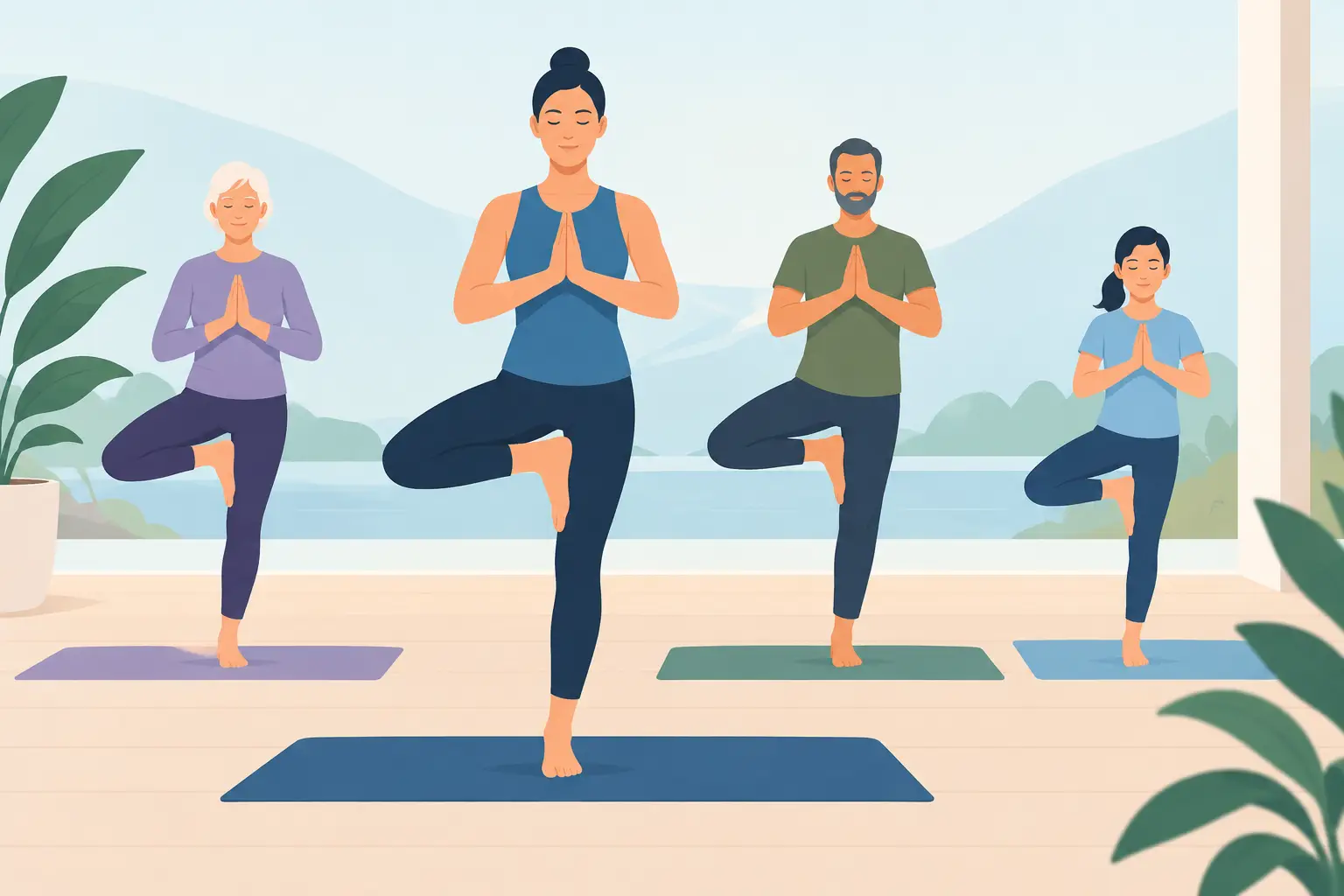
A missed curb, a slick kitchen floor, the moment of reaching for a high shelf – balance matters long before we stand on one foot in a yoga class. Yoga for balance and stability offers a quieter way to build confidence for those everyday moments. It is not about holding a difficult pose perfectly or proving how flexible you are. It is about learning how to feel supported in your own body.
For many people, the concern is not athletic performance. It is wanting to walk with less hesitation, rise from a chair more comfortably, move through a busy day with greater ease, or return to gentle activity after time away. A mindful yoga practice can meet those needs with patience, options, and respect for where you are beginning.
Why balance changes over time
Balance is not one single skill. It is a conversation among your feet, legs, hips, core, eyes, inner ear, breath, and nervous system. When one part of that conversation feels less reliable – perhaps because of stiffness, pain, injury, stress, medication, or simply less movement in daily life – your body may begin to compensate.
That does not mean you have failed or that you need to push harder. It means your practice may benefit from being more intentional. Gentle, repeated movement helps you notice where you shift your weight, how you use your feet, and when you hold unnecessary tension. Over time, that awareness can make movement feel less uncertain.
Strength is part of the picture, especially in the feet, ankles, thighs, hips, and abdominal muscles. Flexibility matters, too, but only when it is paired with control. A very deep stretch is not automatically useful if it leaves you feeling wobbly. In balance work, steadiness often matters more than range.
What yoga for balance and stability can support
A well-guided practice can help you build the physical and mental habits that make steadier movement more available. This may include standing with more awareness, transitioning slowly from one position to another, and using your breath to settle the urge to rush.
Yoga can also strengthen your relationship with the ground. In standing shapes, you learn to gently press through the foot, sense the contact points beneath you, and distribute weight rather than gripping with your toes. That simple attention can be surprisingly powerful.
There is also an emotional benefit. Fear of falling or feeling unsteady can cause people to move less, which may gradually reduce confidence and strength. Practicing in a supportive setting creates room to try, pause, use a wall or chair, and try again. Confidence grows through safe repetition, not pressure.
Yoga is not a replacement for medical care, physical therapy, or a conversation with your health professional when balance changes suddenly or significantly. If you have frequent falls, dizziness, numbness, severe joint pain, or a recent injury, seek individualized guidance before beginning new movement. The most caring practice is one that honors your health needs.
Start with support, not strain
Using support is not a shortcut. It is a skillful way to let your body learn without becoming overwhelmed. A chair, wall, countertop, or sturdy piece of furniture can offer reassurance while you build strength and coordination.
Chair Yoga can be a particularly welcoming place to begin. Seated practice allows you to explore posture, ankle mobility, leg strength, gentle twists, and breath awareness with the chair beneath you. You can also use the chair for standing work, keeping one or both hands nearby as you practice shifting weight from side to side.
The right amount of support depends on the day. Some days, a hand on the wall may allow you to feel your alignment more clearly. On other days, you may choose to hover your fingertips near the support and notice what changes. There is no prize for removing support before you are ready.
Build from both feet first
Before practicing single-leg balance, spend time standing with both feet grounded. Place your feet about hip-width apart, soften your knees, and let your arms rest comfortably. Slowly shift a little weight toward the right foot, then return to center. Repeat to the left.
Move slowly enough that you can feel the shift happen. Notice whether one side feels easier, tighter, or less familiar. Rather than judging the difference, let it inform your practice. Bodies are wonderfully individual, and balance is often different from side to side.
You can add a gentle heel lift while holding a chair or wall: rise onto the balls of both feet, pause, then lower with control. This simple movement asks the ankles and calves to participate while keeping the experience grounded and manageable.
Practice transitions with care
Many real-life balance challenges occur while changing positions, not while standing still. Moving from sitting to standing, stepping over a curb, turning around, or bending to pick something up all require coordination.
In yoga, transitions deserve as much attention as poses. If you rise from a chair, place your feet firmly underneath you, lean forward from the hips, and use your exhale as you stand. Pause once you are upright before taking a step. This moment of stillness helps your body organize itself.
The same principle applies when lowering back into the chair. Reach your hips behind you, keep your movement slow, and feel the chair before fully sitting. Repeating this motion with mindful control can build useful leg strength for daily life.
Gentle poses that encourage steadiness
The best balance poses are often the ones you can repeat with calm attention. A smaller, well-supported version may offer more benefit than a dramatic shape held with tension.
Mountain Pose is a beautiful starting point. Stand tall with your feet grounded, shoulders easy, and breath unforced. Imagine lengthening through the crown of your head while remaining connected to the floor. This is not rigid posture. It is a calm, awake way of standing.
Tree Pose can be adapted in many ways. Keep one set of toes on the floor with the heel resting lightly at the opposite ankle, or place the foot against the calf below the knee. A wall or chair can remain close by. If lifting the foot does not feel right, simply shift more weight into one leg while the other toes stay down.
Warrior II offers another accessible form of stability. With feet comfortably apart, bend the front knee only as much as feels supportive and keep the back foot grounded. The pose can help you feel the strength of your legs and the spaciousness of your breath at the same time.
For some people, a gentle supported lunge or slow side step may be more useful than a traditional balance pose. Yoga is adaptable. The goal is not to fit your body into a shape, but to choose shapes that help your body feel secure.
Let your breath set the pace
When we feel unsteady, we often hold our breath, tighten the shoulders, or rush to get out of the position. A slow breath can interrupt that pattern. Try inhaling as you prepare and exhaling as you shift, stand, lift, or step.
Breath will not eliminate every wobble, nor should it. Wobbling is information. It can show you that your body is making small adjustments, which is part of balance. The practice is to respond with curiosity instead of alarm: soften the jaw, return to your support, and begin again.
Mindfulness also makes balance practice more restful. Rather than counting how long you can hold a pose, notice how you feel while you are there. Are your toes gripping? Can your shoulders soften? Does your breath remain smooth? Those questions create a practice that supports the whole person.
Choose a practice that meets you where you are
A large, fast-paced class is not the only way to practice yoga. Smaller, personalized settings can make it easier to ask for modifications, take a pause, and receive guidance that respects your mobility, goals, and comfort level.
At Cheemah on South Main, accessible options such as Chair Yoga, Gentle Yoga, and Inclusive Vinyasa can support a gradual approach to strength and confidence. Private sessions may be especially helpful if you are returning to movement after an injury, navigating physical changes, or simply prefer one-on-one attention. Aerial Yoga may also be enjoyable for those seeking supported strength and playful exploration, though it is best approached with an instructor who understands your needs.
Consistency matters more than intensity. A few mindful minutes practiced regularly can be more supportive than an occasional effort that leaves you sore or discouraged. Some people enjoy a class once or twice a week; others begin with a brief home practice of seated ankle movements, supported standing, and conscious breathing. It depends on your energy, mobility, and the kind of support that helps you feel safe.
Your balance is not a test you either pass or fail. It is a living skill that can be nurtured, one grounded breath and one steady step at a time.
Leave a Reply