
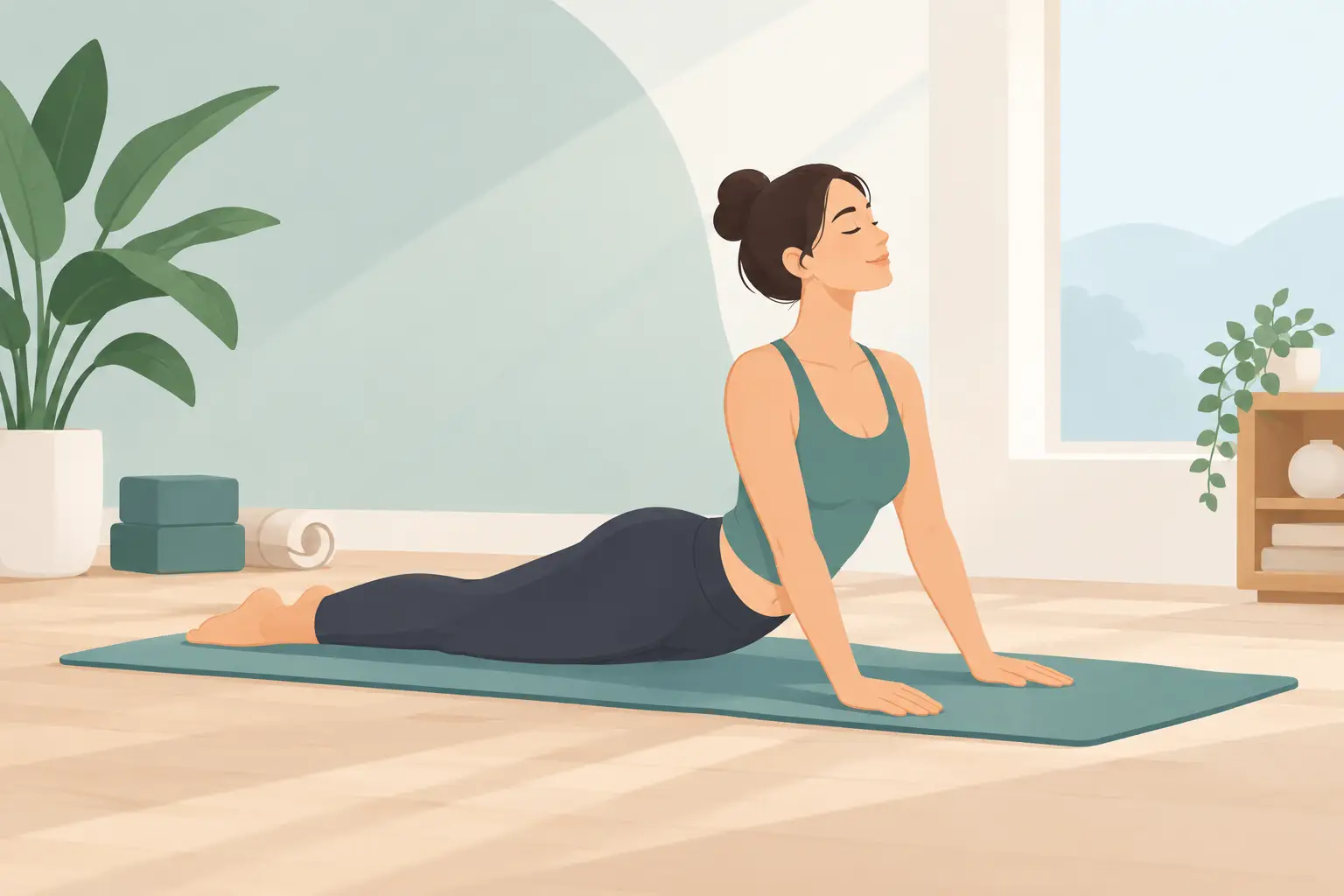
Waking up with tight shoulders, hesitating before getting down to the floor, or feeling your hips protest after a short walk can make yoga seem like it is meant for someone else. But beginner yoga for stiff bodies begins with a different idea: you do not need to become flexible before you practice. You practice to create a little more comfort, confidence, and room to move in the body you have today.
Stiffness is not a personal failure, and it does not mean you are behind. It can come from sitting at a desk, spending long hours on your feet, recovering from an injury, managing stress, aging, or simply moving less than you would like. A supportive yoga practice meets that reality with curiosity rather than pressure.
What Stiffness Is Asking For
When a body feels stiff, the natural instinct is often to stretch it harder. Yet forceful stretching can make muscles guard even more, especially when they already feel tender or uncertain. Many people find better results by starting with gentle, repeated movement, steady breathing, and positions that feel stable.
A gentle yoga practice may help support mobility, balance, and body awareness. It can also offer a quiet pause from the habit of pushing through discomfort. The goal is not to pull your foot behind your head or hold a shape that does not feel right. The goal is to notice where you are, move with care, and gradually build trust in your body.
Some days that may look like a few shoulder rolls and a supported forward fold. Other days, you may feel ready for standing poses that strengthen your legs and help you feel more grounded. Both are yoga. Both count.
Beginner Yoga for Stiff Bodies Starts With Support
A good first practice should leave you feeling more settled, not depleted. Props are not a sign that you are doing less. A chair, wall, blanket, yoga blocks, or even a sturdy stack of books can make movement safer and more accessible while helping you stay present in each pose.
A chair is especially helpful if getting to and from the floor feels challenging, if balance is a concern, or if you would simply like more stability. Seated cat-cow movements, gentle side bends, ankle circles, and seated twists can awaken the spine and joints without requiring you to bear weight through the hands or knees.
The wall can be equally reassuring. Try placing your hands on the wall for a standing variation of downward-facing dog, stepping far enough back that your torso lengthens comfortably. This creates space across the back and shoulders without asking for the wrist and hamstring flexibility of the traditional floor version.
If you do practice on a mat, padding beneath the knees can make a meaningful difference. A folded blanket may help you stay longer in a low lunge or tabletop position, while blocks can bring the floor closer to your hands. Comfort is not an obstacle to progress. It is often what makes consistent practice possible.
Let Your Breath Set the Pace
Breath is a useful guide when deciding whether a stretch is appropriate. If you can breathe slowly and smoothly, you are likely working at a manageable level. If you are holding your breath, clenching your jaw, or feeling sharp pain, it is time to ease out, add support, or choose another option.
Rather than trying to take the deepest breath possible, begin by noticing the breath you already have. A soft inhale and a longer, unhurried exhale can encourage the nervous system to settle. That sense of safety matters. A body that feels safe is often more willing to release tension over time.
A Gentle Place to Begin
You do not need a long sequence to feel the benefits of movement. Ten patient minutes can be more helpful than an ambitious hour that leaves you sore or discouraged. Try this simple progression at a pace that feels comfortable.
Start seated in a chair or standing with one hand near a wall. Take three relaxed breaths, allowing your shoulders to soften away from your ears. Roll the shoulders slowly forward and back, then gently turn your head from side to side. Keep the movement small if your neck is sensitive.
Next, warm the spine with a few rounds of cat-cow. In a chair, place your hands on your thighs. Inhale as you broaden your chest and gently lift your gaze. Exhale as you round your back and let your chin lower slightly. There is no need to create a dramatic shape. Let the breath lead the movement.
For the hips and legs, try a supported standing pose. With one hand on a chair or wall, step one foot back and bend the front knee a little. Keep both feet pointing generally forward and make the stance shorter than you think you need. You may feel a mild opening through the calf or hip flexor. Stay for a few breaths, then switch sides.
Finish with a seated or standing forward fold that keeps the knees bent. Rest your hands on your thighs, a chair seat, or blocks. Let the back of the body lengthen without pulling yourself downward. Rise slowly, pausing if you feel lightheaded.
This is not a test of how far you can go. It is an introduction to moving with attention.
How Often Should You Practice?
For stiff bodies, consistency usually matters more than intensity. A short practice three or four times a week can feel more sustainable than one demanding class followed by several days of soreness. Even brief moments throughout the day can help: a stretch after sitting, a few standing movements while the coffee brews, or quiet breathing before bed.
Progress is rarely a straight line. You may feel noticeably looser one week and tighter the next because of sleep, weather, stress, activity, or health changes. That does not mean the practice is not working. It means your body is giving you useful information.
Consider measuring progress in more than inches of flexibility. Perhaps you can turn to look over your shoulder more easily, walk with less hesitation, stand up from a chair with more confidence, or respond to a tense day with a few calming breaths instead of more strain. These changes are meaningful.
Know the Difference Between Sensation and Pain
A gentle pull, warmth, or mild muscular effort can be part of yoga. Sharp, pinching, burning, or electric pain is a signal to stop. Numbness, tingling, dizziness, or pain that lingers afterward also deserves attention.
If you are managing a recent injury, surgery, osteoporosis, joint replacement, uncontrolled blood pressure, chronic pain, or another medical concern, ask a qualified health professional what types of movement are appropriate for you. A skilled yoga instructor can offer options, but yoga should work alongside your care, not replace it.
It also helps to release the expectation that every pose must look one particular way. Two people can be practicing the same pose while using different supports, ranges of motion, and breath patterns. The most helpful version is the one that respects your body.
The Value of Small, Personalized Classes
Beginning yoga can feel vulnerable when you are worried about keeping up or being watched. A smaller class can offer room to ask questions, take breaks, and learn variations without feeling rushed. Personalized instruction is particularly valuable when stiffness comes with limited mobility, balance concerns, or uncertainty about where to begin.
At Cheemah on South Main, options such as Chair Yoga, Gentle Yoga, and private sessions create space to explore movement in a calm, encouraging setting. The point is not to perform. It is to find an approach that helps you feel supported enough to return.
Aerial yoga may also be an option for some people once they feel ready. The silk hammock can provide support and a sense of ease in certain movements, though it is not automatically the best starting place for every body. Your comfort, health history, and confidence level should guide the choice.
Stiffness may have become familiar, but it does not have to define your relationship with movement. Begin where you are, use the support you need, and give your body permission to respond slowly. When you are ready for guidance, view Cheemah’s classes and booking options to choose a supportive place to begin.
Leave a Reply